Top

Cairo Time

September 4, 2010 by Elaine · Leave a Comment 

The romance of travel got a big-screen, big-budget push a few weeks ago from “Eat Pray Love.” But quietly waiting in the wings was a better film about self-examination in a foreign land: “Cairo Time.”

Written and directed by Ruba Nadda, “Cairo Time” has made its rounds on the festival circuit, winning over audiences with its genteel version of the archetypal “forbidden love” romance-novel plot. Patricia Clarkson plays Juliette Grant, a Canadian in Cairo. Her United Nations-employed husband Mark (Tom McCamus) has been held up at the refugee camp he runs in Gaza, leaving vacationing magazine editor Juliette in a holding pattern.

By long distance, Mark arranges for old friend Tareq Khalifa (Alexander Siddig of “Syriana”) to look after Juliette. A retired policeman and current coffee-shop owner, Tareq knows the city like the back of his hand. He’s a chivalrous breath of fresh air for Juliette, who’s unaccustomed to being the object of Cairo’s sometimes brusque public sexism.

The picturesque romantic travelogue that follows is as obvious but elegant as the bit of symbolism that ends it (I’ll leave that for you to discover for yourself). The plot consists of two middle-aged people strolling around Cairo, each becoming more and more attuned to the attractiveness and uniqueness of the other. The plot points are seldom more dramatic than a game of chess or a stop for coffee and hookah, but an intimacy develops apace.

The demands of the multiplex make films like “Cairo Time” more welcome than ever. With an emphasis on male-female talk (a la “Before Sunrise”) and the Egyptian scenery, Nadda takes her film at a healthy walking pace. The visual style noticeably leans toward old-Hollywood glamour (when she dons a lemon-colored dress, Clarkson seems ready for a “Cosmo” shoot). The film’s most obvious downside is a simplistic outsider’s view of Cairo that’s only slightly mitigated by Tareq.

At times, the script can be a little clunky, as in the early moment when someone says: “Oh, Juliette. Like Juliet and Romeo. How beautiful.” But Nadda proves capable enough of selling sincerity while also knowingly undercutting the story’s conventions (Tareq’s tongue-in-cheek line “I suppose we are destined to never see each other again”).

Given her stature, it’s hard to believe that Patricia Clarkson has never headlined a feature before, but “Cairo Time” corrects that injustice. Clarkson gives her empty-nester a palpable sense of longing as she seeks out the next chapter of her life.

She’s perfectly matched by the long-underestimated Siddig; when not tossing out casually charming lines, he fixes his attentive eyes on Clarkson, demonstrating that he knows job one in acting is listening. Together, the two make this second-chance romance a destination worth visiting.

Egypt hotel company buys rest of Cairo 4 Seasons

September 4, 2010 by Elaine · Leave a Comment 

A subsidiary of Egypt’s Talaat Moustafa Group Holding says it has acquired the stake held by a Saudi company in the Four Seasons Hotel in Cairo’s Garden City neighborhood.

In a statement Wednesday, the Arab Company for Hotel and Tourism Investments, says it bought out the 43.7 percent minority interest in the hotel from Saudi Kingdom Hotel Investments, a subsidiary of Prince Alwaleed Bin Talal’s Kingdom Holding Company.

It says it paid $145 million for the stake.

The head of the Egyptian group, Hisham Talaat Moustafa, is facing a retrial after being sentenced to death for his involvement in a murder.

An Egyptian court is also due to issue Sept. 14 a ruling on the validity of land sale to the group for a vast housing project outside Cairo.

Egypt police kill migrant trying to cross into Israel

September 4, 2010 by Elaine · Leave a Comment 

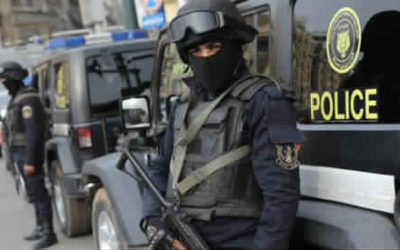
Egyptian police shot dead a man from sub-Saharan Africa on Friday as he tried to cross the border illegally into Israel, a security official said.

“An Egyptian patrol spotted a group of migrants as they were trying to infiltrate Israel south of the Rafah terminal,” he said. “When the police asked them to stop, they refused and tried to flee into Israel.

“Police had to fire on the African migrants, which led to the death of one of them,” he said, without identifying the victim.

He said two Sudanese were arrested and that the rest of the group was able to get away.

Friday’s death takes to 30 the number of migrants killed on the Egypt-Israel border since the beginning of the year — 25 of them by Egyptian police.

Cairo has rejected strong criticism from human rights groups of its policy of using potentially lethal force against migrants along its 250-kilometre (150-mile) border with Israel.

The Sinai desert border has become a major trafficking route for African migrants seeking jobs and for eastern European women headed for the sex trade.

Posters for spy chief as president removed

September 4, 2010 by Elaine · Leave a Comment 

Posters supporting Egypt’s intelligence chief as a candidate in next year’s presidential election were removed from Cairo’s streets hours after they appeared, while an independent newspaper was ordered to pull reports of the campaign from its pages, officials said Friday.

The swift reaction against the posters, which bore an image of Lt. Gen. Omar Suleiman in a dark business suit and sunglasses and waving his right hand, appeared to indicate that the campaign backing the enigmatic spy chief had embarrassed President Hosni Mubarak’s regime.

Suleiman is a close aide of Mubarak, the 82-year-old who has ruled Egypt for nearly 30 years and is still officially the ruling party’s candidate in next year’s presidential vote.

The campaigners behind the posters, which dubbed Suleiman the “real alternative,” say they oppose a possible succession in which Mubarak passes power to his son, banker-turned-politician Gamal. Both deny that such a plan exists.

A security official, speaking on condition of anonymity because he was not authorized to speak to the media, said municipality workers removed all of the posters Thursday soon after they appeared. He did not elaborate.

Campaign organizers also confirmed the posters were taken down.

The activists insist on anonymity, making it impossible to determine who or how popular they are.

The question of who will succeed Egypt’s longtime ruler has gained added urgency since the elder Mubarak traveled to Germany earlier this year for surgery to remove his gallbladder and a benign growth in his small intestine.

His 46-year-old son has been a rising force in Egyptian politics since 2000, and now serves as the ruling party’s chief strategist. Earlier this month, posters sprung up around Egypt supporting Gamal as a candidate for presidency.

In an indication of just how delicate the issue of who will succeed the elder Mubarak is, an official at the independent Al-Masry Al-Youm daily the paper was ordered to destroy 30,000 copies of the daily that carried reports of the Suleiman poster campaign.

It was an unusual request for Egypt’s largely vibrant press.

The official, who also spoke on condition of anonymity because of the sensitivity of the issue, said the printing house of a state-owned newspaper refused to print another batch of Al-Masry Al-Youm until news of the campaign was pulled from the front page.

The state-owned printing house was following orders from senior officials, the official said without elaborating.

Suleiman, 74, has been Egypt’s intelligence chief for nearly two decades. He is a close Mubarak adviser and is in charge of Egypt’s most pressing foreign policy issues, such as relations with Israel, the United States and neighboring Sudan.

He rarely speaks to the media and, like most of those with intelligence or military backgrounds, is viewed positively by many Egyptians who look to him as a candidate that would keep Egypt’s top job within the widely respected military. He has never publicly expressed a wish to run for president and is not a member of the ruling party.

Peace talk participants ‘traitors’

September 4, 2010 by Elaine · Leave a Comment 

Egypt says it has canceled a meeting with Iran’s foreign minister after he called participants in Israeli-Palestinian peace talks “traitors.”

Egypt’s Foreign Ministry issued a statement saying the scheduled Sunday meeting between Egypt, Iran and Cuba was off and then summoned the Iranian charge d’affaires in Cairo to clarify the statement made by Iranian Foreign Minister Manouchehr Mottaki, Egypt Daily News reported Friday.

“Some Palestinian leaders, who are for compromise, are these days following an order from America and building the table of negotiation with heads of the Zionist regime,” Mottaki said. “They should know that they are traitors to the Palestinian people and the negotiation is a nail in the coffin of (those who support) compromise.”

Nabil Abdel-Fatah, an analyst at Al-Ahram Center for Political and Strategic Studies, said Mottaki’s comments were made deliberately to cast doubt on the moderate Arab states’, Egyptian and American efforts to jump-start peace talks, the newspaper said.

“It is part of the attempts by the Iranian axis in the region to influence the current peace talks, which do not include Iranian allies like Hamas, so it is expected that Egypt respond in such a manner,” Abdel-Fatah said.

“Regardless of the actual possible success of the talks and the serious obstacles it faces, the Iranian comments are an attempt to blur the issue.”

Facebook campaign launched against power cuts

September 3, 2010 by Elaine · Leave a Comment 

Egyptians disgruntled with the continuous and excessive power cuts, took their frustration to Facebook, starting a campaign satirically titled “You are Radiant, Government – No to Power Cuts in Homes.”

The campaign’s page, set up as an event on the social networking site and attracting over 10,000 users, criticized the government for blaming the power cuts on excessive consumption and for implementing a load shedding strategy.

“The government says that the people’s misuse of electricity is the reason behind the power cuts, but at the same time we find the street lights turned on in broad daylight, for days and sometimes even weeks in a lot of streets around Egypt,” the Facebook page says.

The campaign title in Arab (Nenawwar ya hokouma) is a play on words referring to these “radiant” light poles that are always switched on.

The campaign calls on its supporters to take photographs of the light poles while they are turned on during the day and send these pictures to the Facebook page, highlighting the location, time and date of the incident.

“We will then collect all these pictures and send them to all the newspapers, magazines and TV channels, so the government can realize that the real reason behind the power cuts is the negligence and corruption of the Ministry of Electricity, not the people,” the page adds.

Ahmed Refaey, campaign supporter and Sharqeya resident, told Daily News Egypt, “We have power cuts every two days that last from one to two hours. My air conditioner broke down twice because of the excessive power cuts.”

“I was very upset and decided I had to take a firm stance, that’s why I joined the Facebook campaign,” he added.

The Ministry of Electricity had announced a strategy of load shedding to cope with the increase in consumption during the heat of August and the peak hours of Ramadan (7 pm to 10 pm).

The ministry also called on citizens to ration their consumption and claimed that excessive and wasteful use of electricity, in addition to the unprecedented hike in temperatures, were the reasons behind the power cuts.

One of the campaign’s supporters wrote on the Facebook page, “All the light poles in New Cairo are lit by day and turned off by night.”

Another supporter claimed that the power was out for four hours at his friend’s shop in Alexandria last week.

Another questioned how long these power and water cuts would last. “There’s no power, no water, when will we be like other countries?” he said.

“We are not asking the government to find us jobs. We pay our water and electricity bills, we need light, isn’t that our right?” he added.

Several local reports claimed that hospitals and factories have been affected by the power cuts, incurring financial losses. Stations responsible for the supply and distribution of water were also affected, leaving citizens in some areas with neither water nor electricity.

The campaign was launched on Aug. 26 and will continue until Sept. 10.

The campaign, which aims to gather 100,000 supporters, described the government as “the reason behind poverty, corruption and injustice.”

Opposition and human rights groups have called for the resignation of the Minister of Electricity and Energy Hassan Younes, accusing him of “failure” and “incompetence.”

Younes had announced earlier this week that the electricity network will be improved, to provide an additional 1,400 megawatts, starting Sept. 10.

He added that this development would help stabilize the network and allow it to handle additional loads.

Egypt’s Mubarak, Israel, and Obama

September 3, 2010 by Elaine · Leave a Comment 

One fascinating subplot of the Middle East peace talks in Washington this week is the role of Egyptian president/dictator Hosni Mubarak. The 82-year old Mubarak, who has long governed Egypt with an iron fist–but has served as a useful strategic partner for America–is very old, visibly frail, and possibly cancer-ridden. For many months he has been grooming his westernized son, Gamal, for a smooth succession into the presidency, and the fact that Gamal has joined his father in Washington this week was clearly about something more than tourism. (I’d love to know how engaged Gamal may be in the Israeli-Palestinian talks, particularly given that his father’s lucidity is suspect nowadays.)
More substantively, while the Mubarak regime may be grossly repressive and anti-democratic, one thing you can say for Hosni and son is that they sing a quite reasonable tune about Israel and the peace process. They loathe Hamas (albeit for selfish reasons: Hamas despises the Egyptian regime for its good relations with Israel), and Hosni’s vision of the peace process as explained in the New York Times op-ed page this week was quite admirable for a leader whose population is virulently anti-Israel. Of course, the Mubaraks have an incentive to play along with Obama, because by all accounts Egypt is terrified by the rise of Iran and is very keen on working with America to blunt Persian influence in the region.
And don’t think that’s not extremely important to the Obama White House. You’ll recall that when Obama delivered his address to the Muslim world from Cairo last summer, he largely soft-pedaled the question of human rights and democracy there–an issue George W. Bush tried to emphasize briefly, before concluding it was more trouble than it was worth. But that’s a change in worldview for Obama. Writing about Obama and Iraq this week, I went back and read his famous 2002 speech against the war, which included this passage:
You want a fight, President Bush? Let’s fight to make sure our so-called allies in the Middle East, the Saudis and the Egyptians, stop oppressing their own people, and suppressing dissent, and tolerating corruption and inequality, and mismanaging their economies so that their youth grow up without education, without prospects, without hope, the ready recruits of terrorist cells.
Of course, those words were spoken in 2002, back when America could better afford to talk trash about the Saudis and Egyptians. Now that he’s president, dueling with Iran and trying to restore America’s strategic position, Obama clearly believes that so-called “moderate” Middle Eastern regimes are too important to be hectored in such terms. Enough so that the Carnegie Endowment’s Robert Kagan warns that Gamal’s attendance in Washington this week will be derided on the Egyptian street and elsewhere in the Arab world as “as the US giving its blessing to this latest chapter in Egypt’s long history of dictatorship.” But that’s just fine with Hosni and Gamal Mubarak

Bird flu stikes again

September 3, 2010 by Elaine · Leave a Comment 

A 33-year-old woman from the governorate of Qalyubia, north of Cairo, was admitted to the hospital on Tuesday after showing symptoms of the avian flu, a statement by Egypt’s Health Ministry said on Wednesday.

The woman’s condition is serious, the statement added without elaboration.
Egypt is the most affected country by the virus outside Asia, which reported its first H5N1 virus in dead poultry in February 2006 and the first human case in March of the same year.
Egypt’s Agriculture Minister Amin Abbaza said in July that his country has prepared a national strategy to eradicate bird flu in five years.

Group promotes Egypt’s spy chief for president

September 3, 2010 by Elaine · Leave a Comment 

A group of activists have hung up posters around Egypt’s capital supporting the country’s intelligence chief as a possible candidate in next year’s presidential elections.

Launched Thursday, the campaign for Omar Suleiman is the latest stab against a possible father-son succession in which President Hosni Mubarak, Egypt’s leader of nearly 30 years, passes power to his son, banker-turned-politician Gamal.

Mubarak, 82, and his son deny such a plan exists, but Gamal Mubarak’s political influence has been growing since 2000.

Opposition has been vocal against such a succession, floating names of alternative candidates like Suleiman and former U.N. nuclear agency chief Mohammed ElBaradei.
The posters call Suleiman a “real alternative.”

TV show stirs debate over Muslim Brotherhood

September 3, 2010 by Elaine · Leave a Comment 

The bearded young cleric yells at a young woman for lifting her traditional veil from her face while speaking to him on the street, and rants against Egyptians who adopt Western lifestyles and values. His followers beat up an opponent.
That is the image of the founder of the Muslim Brotherhood depicted in a TV miniseries airing in Egypt that casts a harsh light on the country’s largest opposition movement just three months before a crucial parliamentary election that is expected to pit it against President Hosni Mubarak’s ruling party.
Supporters accuse the government of using the show as a propaganda tool to demonize the fundamentalist group by portraying it as a collection of fanatics battling secular-minded and Western-oriented Egyptians and trying to turn Egypt into an Islamic society.
Political scientist Ashraf el-Sherif, however, said the program has had the opposite effect.
“What the series has done is turning a dinosaur into a living political phenomenon,” said el-Sherif, who lectures at the American University in Cairo. “Now, the Brothers are no longer a banned group, as the government insists. They have entered every house, street and coffee house in Egypt.”
The Muslim Brotherhood is deeply mistrusted by many Egyptians but has also gained a measure of popular support with its network of social services. It is the largest and most organized political opposition movement, posing a strong challenge to a government that faces a rising tide of calls for democratic reforms and protests over the lack of basic services.
The group, founded in 1928, was banned in 1954 on charges of using violence. But it has since renounced violence, expanded its international presence and participated in Egyptian elections as independents despite frequent crackdowns. It surprisingly won about 20 percent of the 454 seats in 2005 parliamentary elections and since then, authorities have jailed around 5,000 of its members.
Egypt will have a parliamentary election in November and a presidential poll next year.
The TV drama, titled “Al-Gamaa,” or “The Group,” has become one of the most popular of this year’s Ramadan series. During the holy month, soap operas and miniseries are a popular tradition for Muslims who usually gather at home in the evenings after breaking their dawn-to-dusk fast.
It was produced by a private company Albatros Film Production in association with state-owned television. The episodes, which are broadcast nightly on state TV and rerun later on a privately owned channel, reportedly have attracted the most commercials among the more than 60 Ramadan soap operas in another measure of its popularity.
The plot centers on a recent court case in which the Brotherhood was accused of setting up a student militia, then uses flashbacks to tell the story of its foundation. One TV presenter said watching the show is better than reading 20 books on the group.
Critics say the show is historically inaccurate, and leading Brotherhood members allege that the script expresses the views and policies of Egypt’s powerful security apparatus, which regards the group as a breeding ground for extremists.
“What was meant to be a work of drama has turned into flagrant political propaganda,” said Abdel-Gelil al-Shernouby, editor of the Brotherhood’s website.
The show’s creator, Wahid Hamid, a renowned script writer who is known for his secular views and disdain for Islamic political groups, acknowledged he took some liberties with the facts for production purposes. But he has insisted the show was mainly based on the group’s own documents, including a memoir and other writings by its founder Hassan al-Banna.
Al-Banna, who was assassinated in 1949, is portrayed as a conservative, intolerant cleric who barks at women for not properly covering their heads and attacks Egyptians who adopt Western lifestyles or values.
A charismatic schoolteacher, al-Banna founded the group with the goal of establishing a system that is guided by Shariah, or Islamic law.
He traveled to remote villages to preach Islamic values and call for an Islamic awakening in mosques, schools and coffeeshops. The movement has since spread from Indonesia to Morocco, with many followers in the United States and Europe. From it were born other political Islamic groups — including the militant Palestinian Hamas movement.
The Brotherhood has been blamed for assassinations and armed attacks against political opponents, but its leaders insist that was part of its troubled past.
“Those who know the Brothers will know the lies of the government and its media and will make sure those people who haven’t met the Brothers are eager to know them and probably join them,” the group’s supreme leader Mohammed Badie said.
The group has stepped up efforts to improve its image with videos and its own Facebook-style social networking site known as Ikhwanbook, which advertises a goal to “spread awareness of moderate Islamic values.”
Pro-government writers say the Muslim Brotherhood’s history cannot be whitewashed.
“Egyptians know that the Brotherhood intends to set up an Islamic state that will suppress its opponents,” wrote Abdel Moneim Saeed, a senior ruling party member and chairman of the board of the state-owned Al-Ahram newspaper. “It is hostile to all and wants to push the nation back to the Middle Ages.”

« Previous PageNext Page »

Bottom