Egypt’s military blames foreign intervention
July 30, 2011 by admin · Comments Off
Egypt is already on the edge, facing citizen arrests and fears that the protesters currently engaged in a sit-in in Cairo’s Tahrir Square are “spies.” On Wednesday afternoon, the head of Egypt’s military junta said that foreign countries were “meddling” in the internal affairs of the country.
The statements by Field Marshal Mohamed Hussein Tantawi come as a public battle for support is being waged between the protest movement and the military, who last week claimed the 6th of April youth movement had a “suspicious plan” for Egypt.
Those comments, made public in an official Supreme Council of the Armed Forces (SCAF) statement led to clashed between residents in the Abbassiya neighborhood on Saturday that saw some 300 people injured.
“There are foreign players who feed and set up specific projects that some individuals carry out domestically, without understanding,” Hussein Tantawi, head of the ruling military junta said in an address to officers.
“It is possible that there is lack of understanding, that foreign players are pushing the people into inappropriate directions,” Tantawi said, adding that such foreign parties “did not want stability for Egypt.”
Tantawi, who has received the brunt of activists calls for change – including his removal – did not call on his troops to intervene in the civilian battles last weekend.
“It was the people who intervened and confronted this,” he said, stressing that “the armed forces have protected the revolution.”
Tantawi added that the army was staying the course and was “committed” to handing over power to a civilian government after elections, scheduled to begin this November.
However, worries are growing in Egypt that the military is attempting to maintain power and is not moving swiftly enough to implement the demands of the protesters, namely the ending of military trials for civilians and the speedy trials of former regime officials.
On the ground, the PR fight is taking its toll, with many average Egyptians believing the military’s denouncements of the protesters in Tahrir, which has led to worries that violence could spark in greater numbers.
Plane catches fire at Cairo airport
July 30, 2011 by admin · Comments Off
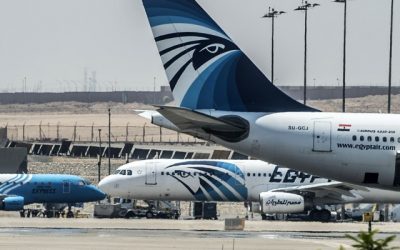
Airport officials say some 300 passengers were rushed off an Egypt Air plane that caught fire before takeoff from Cairo.
The officials say an electrical short in the cockpit caused the fire early Friday as the plane was scheduled to fly to Jiddah, Saudi Arabia.
The passengers were rushed off the plane to a transit hall as firefighters put out the flames. The officials said two firefighters were later taken to the hospital to be treated for smoke inhalation.
The fire didn’t affect general air traffic and another plane was being prepared for the passengers traveling to Jiddah.
The officials spoke on condition of anonymity because they were not authorized to speak to the media.
Salafists lead Tahrir rally
July 30, 2011 by admin · Comments Off
Thousands of Salafist protesters Friday packed Cairo’s iconic Tahrir Square, where they joined members of liberal groups in a Friday of Unity to renew their calls for the trial of officials from the former regime.
However, the Islamic slogans and banners showed potential tensions between the Salafists and the liberals. The Salafists, in a show of force, called for setting up an Islamic state and enforcing Sharia law in Egypt.
Chanting “There is no God but Allah” and “Islamiya, Islamiya”, the Salafists waved banners that read “Islamic Egypt”. They also waved Saudi flags.
The Salafists’ chants drew criticisms from others who said the slogans violated an agreement to avoid divisive issues.
Instead of “Peaceful, peaceful,” which demonstrators have chanted during confrontations with security forces, they repeated “Islamic, Islamic”.
And instead of “The people want to topple the regime”, they yelled, “The people want to implement Sharia,” a strict form of Islamic law.
Salafists are ultraconservatives, close to Saudi Arabia’s Wahhabi interpretation of Islam and more radical than the Brotherhood. They seek to emulate the austerity of Islam’s early days and oppose a wide range of practices like intermingling of the sexes that they view as “un-Islamic”. Many also reject all forms of Western cultural influence.
More than 15 parties and political movements took part in yesterday’s protest to demand an end to military trials of civilians, the prosecution of former regime members found guilty of abuse, and the redistribution of wealth.
The Islamists wanted the Supreme Council of the Armed Forces (SCAF) to cease its plans for presenting a set of principles that will form a framework for a new constitution.
Islamist groups such as the Muslim Brotherhood, Gamaa Islamiya and Salafists argued that only God’s word is greater than any man-made constitution and that only a parliament chosen by free election can set the terms for a constitution, due to be re-written after the People’s Assembly and the Shura Council will be elected in November. “Islamic law above the Constitution,” the Salafists chanted.
They said that they would gain enough support to dominate such a parliament and thereby set the terms.
The groups fear that a kind of bill of rights could close off the possibility of a state run by Islamic laws.
The liberal youths, who once dominated Tahrir, were a minority in the square.
The protesters said tensions mostly emerged between liberal groups and Salafists rather than the Brotherhood, which takes a conservative but not strict Salafist approach to Islam.
In Suez, some 120km northeast of Cairo, the official MENA news agency said some groups including the liberal Wafd Party announced they were withdrawing from the rally because of Islamist tactics.
“(Wafd) and a large number of parties as well as the Suez Revolutionary Coalition decided not to participate after they had become sure that the religious groups participating refused the principle of harmony and insisted on slogans that bring up divisions,” Ali Amin of the Wafd Party was quoted as saying.
However, alongside the Islamic slogans, there were also other chants in Tahrir, such as “People and the Army, hand in hand”.
Some protesters have accused the Brotherhood, which was banned under Mubarak but now enjoys unprecedented freedom, of making a pact with the Army.
The group denies it. But the question of how hard to push the Army over reforms remains.
In the Sinai city of el-Arish, hard-line Salafists fired rocket-propelled grenades and other heavy weapons in the air during protests, injuring a small boy, according to an intelligence official who spoke on condition of anonymity because he wasn’t authorised to release the information.
In the southern city of Assiut, deputy police chief Yosri el-Jammasi said Salafist protesters beat up a group of protesters from the Communist party trying to join their demonstration. At one point, some in the crowd yelled back at a speaker who criticised the idea of constitutional guidelines.
Religion the issue at divisive Egypt demonstration
July 30, 2011 by admin · Comments Off
A huge rally Friday meant to symbolize unity highlighted instead the deepening splits between secular and religious parties over Egypt’s future, signaling battles certain to unfold in coming months over the influence of Islamic law on the nation’s new constitution.
The demonstration in Cairo’s Tahrir Square, one of the largest since President Hosni Mubarak was toppled in February, reaffirmed the power of the Muslim Brotherhood and other Islamist organizations that amassed tens of thousands of supporters. It came as weeks of protests have convulsed the country and polarized political parties whose true agendas are emerging.
“The people want an Islamic state,” Islamists chanted while outnumbered secular demonstrators watched from the sidelines in a square streaked with religious banners and echoing with loudspeakers.
Secularist parties have pressured the ruling military council to draft guidelines to govern the writing of a constitution. The Muslim Brotherhood has criticized the move as an attempt to circumvent the new Parliament, which Islamists are expected to control, giving them power to pass a constitution weighted in Sharia law.
“I’m really scared of the potential of an Islamic state in Egypt. Islamists like the Muslim Brotherhood don’t allow any democracy within their movement,” said Amira Badr, a 27-year-old administrator who attended the rally.
The competing goals reveal the passions and dangers the Arab’s world’s most populous country faces as it navigates away from the Mubarak era and toward defining Egypt’s character for coming generations.
The demonstration was to be a day of putting differences aside so Islamists and secular groups could protest together in urging the military council to enact reforms and bring officials from Mubarak’s regime to justice. That unity, however, was overwhelmed by calls from moderate and ultraconservative Muslims to instill the Quran into the laws of the land.
“Islamic, Islamic, we don’t want it secular,” shouted protesters.
Secular and youth parties worry that such sentiment could shape a constitution that doesn’t protect women and non-Muslims. This concern has grown in recent months as ultraconservative Islamist groups, such as Gamma al Islamiya, which carried out terror attacks in the 1980s and ’90s, have become politically active.
Mubarak Will Be Tried in Cairo Next Week, Official Says
July 29, 2011 by admin · Comments Off
The trial of former President Hosni Mubarak, his two sons and seven associates will be held in Cairo, Deputy Justice Minister Mohammed Munie told the state news agency MENA on Thursday.
The announcement came after the health minister declared Mr. Mubarak, 83, above, well enough to be brought to the capital from a hospital in the Sinai, where he is under arrest.
The trial, scheduled to begin Wednesday, will take place in a convention center with hundreds of seats for an audience.
Citizens attack Mansoura hospital after relative dies
July 18, 2011 by admin · Comments Off
A public hospital in Daqahlia Governorate, north of Cairo, was attacked on Sunday by citizens whose relative died while receiving treatment.
Khaled Eissa, 43, was admitted into the new public hospital in Mansoura on Saturday after falling from the fifth story of a building.
Hospital staff carried out scans and analyses on Eissa until 1 am on Sunday, but he died while receiving first aid.
When Eissa’s family heard the news, they accused the hospital of negligence and slowness. They attacked two nurses and a number of doctors with bladed weapons, but no injuries were reported.
Windows and doors were damaged before military and police forces apprehended the assailants inside a hospital room.
The hospital’s director, Mahmoud Abdel Azim, denied claims of negligence. He said Eissa was in a bad condition when he arrived at the hospital, and the medics did their best to save his life.
Hospitals all over Egypt have been vulnerable to attacks by thugs exploiting the country’s security vacuum that has continued since the January uprising.
Egypt sees Cabinet reshuffle, again
July 18, 2011 by admin · 49 Comments
The musical chairs of the transitional government in Egypt again changed on Sunday as Prime Minister Essam Sharaf announced personnel moves in an effort to appease ongoing protests in the country.
Before they are officially approved, the Supreme Council of the Armed Forces (SCAF) must approve the changes, which is expected to be done on Monday.
The new ministers will be sworn in in front of the council’s chief, Hussein Tantawi, later on Monday.
Leading the list of new ministers was Mohamed Kamel Amr as Egypt’s new foreign minister, replacing Mohamed el-Orabi, who was at his post less than one month.
Previously, Amr had been Egyptian ambassador to Saudi Arabia and a senior official in the World Bank.
Hazem el-Beblawi, a 75-year-old prominent economist, will take over as finance minister and deputy prime minister for economic affairs. Beblawi has been an advisor to the Arab Monetary Fund based in Abu Dhabi since 2001.
Ali el-Selmi, a senior member of the Wafd Party, was on Saturday appointed deputy prime minister for democratic transition.
The new ministers of transport, antiquities, civil aviation, communications and IT, higher education, trade and industry, local development, agriculture and military production were also appointed.
The reshuffle is part of the latest actions aiming to meet the demands of protesters.
But the ministers of interior, justice, culture and information have so far not been included in the reshuffle.
Also on Monday, firebrand Antiquities Minister Zahi Hawass resigned from his position amid much controversy.
BM
American, Egyptian arrested for attacking Cairo statue
July 18, 2011 by admin · 33 Comments
An American citizen and an Egyptian counterpart were arrested on Sunday after they allegedly attempted to cause damage to a famous statue in downtown Cairo. The official MENA news agency reported the two had tried to destroy the Abdel Moneim Riad statue.
According to military sources, the military prosecutor is currently investigating the two after average citizens grabbed them and drove them to Qasr el-Nil police station.
The two maen, allegedly aided by two others who are being sought by police, were seen climbing the statue on a ladder.
They were apprehended by passersby as they allegedly attempted to damage the iconic statue of the Egyptian general who was killed by Israeli gunfire in 1969.
The American Embassy in Cairo did not comment on the arrest as they have a policy of not commenting on the individual cases of American citizens in foreign countries.
Egypt’s generals may maintain large role in governance
July 18, 2011 by admin · 36 Comments
The generals running Egypt ahead of fresh elections have begun to signal that they hope to maintain a key role as guarantors of secular rule after handing over power to a new head of state.
In a recent interview and in public statements, the generals have left no doubt that they see Islamist parties as a threat. Although they have promised to surrender power once a new president is elected, the generals have suggested that the current Supreme Council of the Armed Forces operate in the future as a check on Egyptian governments not deemed sufficiently secular.
One member of the council, Maj. Gen. Mamdouh Shahin, recently recommended that under a new Egyptian constitution, the military be granted special status to keep it from being subordinate to the president, according to the independent Egyptian daily al-Masry al-Youm. Such an approach could put Egypt on a path toward resembling Turkey, whose democracy has been unsettled by tensions between a powerful, secular-minded military and politicians who reflect Islamist popular sentiment.
An interview with another general, a top adviser to the Supreme Council, offered a further glimpse into thinking within that body, which wields enormous clout but has operated mostly behind the scenes since assuming power in February after the ouster of President Hosni Mubarak.
The general, who does public outreach and advises the council on strategic planning, would speak only on the condition of anonymity. “We want a model like Turkey, but we won’t force it,” he said. “Egypt as a country needs this to protect our democracy from the Islamists. We know this group doesn’t think democratically.”
Suspicions persist
The notion that the military could emerge as a guarantor of a secular state runs counter to a theory among secularists and leftists that the Supreme Council is allied with the organized and well-financed Muslim Brotherhood, which is expected to make a strong showing in parliamentary elections scheduled for the fall. Some leftists and human rights activists have been suspicious of the military leadership and worried that the military wields too much control over the future of the state.
“This type of involvement is a double-edged sword, as it injects the military into the realm of governance and potentially interferes with the prerogatives of civilian governance, even if it ensures the viability of a civil state,” said Michael Wahid Hanna, an Egypt expert at the Century Foundation. He added that the military leadership is probably divided over what type of future role it wants to play in Egyptian politics.
The head of the military council is Mubarak’s longtime defense minister, Mohammed Hussein Tantawi. The military was the dominant force in Egypt under Mubarak and his two predecessors, and although the army played an instrumental role in pushing Mubarak from office, experts say the military chiefs seem to still be grappling with how to exercise their political clout. Military leaders have said they have no plans to hold on to power and would like to hand over authority as quickly as possible.
Lawyer says Egypt’s Mubarak in coma, TV denies
July 18, 2011 by admin · 45 Comments
Egypt’s former President Hosni Mubarak, hospitalised since April and due to stand trial in August, is in a coma, his lawyer said on Sunday, although the state news agency MENA cited a hospital official as denying the report.
“Mubarak suffered a sudden loss of blood pressure but quickly returned to normal again after the necessary medicines were given to him. His medical condition is stable,” MENA quoted the official as saying.
Another medical source told Reuters that Mubarak, 83, occasionally slipped into a coma but his condition was stable. Mubarak’s condition has been subject to frequent speculation in the Egyptian media, gaining momentum before his Aug. 3 trial.
Protesters have been camped out in Cairo’s Tahrir Square since July 8 and have protested in other Egyptian cities. Their demands have included calls for the military council now ruling Egypt to speed up Mubarak’s trial.
The former president, who is hospitalised in the Red Sea resort of Sharm el-Sheikh, faces charges of abuse of power and killing protesters. More than 840 died in the 18 days of demonstrations that led to his ouster on Feb. 11.
“I was informed about the sudden deterioration in Mubarak’s health and I am now on my way to Sharm el-Sheikh. All that I know so far is that the president is in a full coma,” Mubarak’s lawyer Farid el-Deeb told Reuters. He did not give more details.
Deeb said in June Mubarak was suffering from cancer, although a government minister later appeared to play down that report.
Some Egyptians have questioned Mubarak’s illness, seeing it as a ploy for the army to avoid putting on trial the decorated former air force commander who ruled Egypt for 30 years.
“The news that comes every now and then about him being in bad condition is designed to gain people’s sympathy, especially now with the public demanding he comes to a jail in Cairo and face trial in Cairo, not in his hospital,” political analyst and activist Hassan Nafaa said.
Mubarak had generally enjoyed good health in office. He underwent gallbladder surgery in Germany in March 2010 but he had appeared to make a full recovery. When in office, officials routinely dismissed talk of ill health including cancer reports.