Top

Minimum wage set at LE708 per month

July 13, 2011 by admin · 1 Comment 

The Ministry of Finance on Monday raised the minimum wage by 59 percent from LE444 to LE708 per month for government employees. The precise wage is determined by an employee’s rank and number of years working.

In a statement on Monday, the ministry said the raise corresponds to LE9 billion, benefiting some 1.9 million government employees, in the new state budget.

The ministry also said the raise aims at narrowing wage differences between official ranks.

It also set an annual maximum wage of LE36,000 and a ceiling for extra bonuses and incentives.

Day Four as Tahrir Square Protests Renew

July 12, 2011 by admin · Comments Off 

Monday was Day Four of massive protests that have again filled the streets around Cairo’s Tahrir Square, bringing traffic to a standstill and by some accounts, annoying Egyptians who just wanted to get on with their day.

No police or soldiers of any kind appeared to be present in the area, journalists on the scene reported.

More than 2,000 mostly young protesters vowed to continue the demonstrations until there is “change.” But other than calling for the jailing of all those responsible for the more than 840 deaths during the revolution earlier this year, they were not clear about what kind of “change” they really want.

“I will continue to protest until the demands of the revolution are met,” 23-year-old John Noshy told a Reuters reporter. “It is not fair that those who killed the protesters are still sitting in their offices… and have not been tried and sentenced yet.”

A banner hung at one entrance to the square proclaimed the passions of those within: “Revolution first and if needed we are ready to sacrifice with our souls and whatever is precious for the revolution to continue and not be stolen.”

More than 1,000 demonstrators were injured during clashes in Tahrir Square last month after police fired huge numbers of tear gas canisters at the mob, Gulf News reported.

Over the weekend, the government announced it had suspended all police officers who are accused of killing demonstrators during the revolution which toppled the regime of former President Hosni Mubarak

Pipeline station blown up: agency

July 12, 2011 by admin · Comments Off 

Saboteurs blew up an Egyptian gas pipeline distribution station in northern Sinai on Tuesday that supplies natural gas to Israel, the official MENA news agency reported.

Nile television said flames from the blast near the town of Al-Arish could be seen up to 20 kms (12 miles) away. It gave no details on the causes of the explosion or the extent of the damages.

But MENA, without citing its sources, said there had been an attack on the station that is used to “export Egyptian gas abroad”, including supplying Israel. Egypt also sells gas to Jordan and other countries.

The agency said fire trucks were trying to contain the flames and security forces were hunting down those responsible.

It also said a security guard and his family were injured in the blast.

The explosion was the fourth attack this year on pipelines in Sinai that supply gas to Israel and Jordan.

Egypt’s gas transport company, Gasco, a subsidiary of the national gas company EGAS, has been finalising repairs on a pipeline that supplies gas to Israel and Egypt, and was expected to complete the work over the weekend,

A security source had said after the blast on July 4 that men in a small truck who were armed with machineguns forced guards at the station to flee, then planted explosive charges.

Previous attacks on the pipeline on April 27 and on February 5 closed the pipeline for weeks.

Four US nationals held in Egypt: military sources

July 12, 2011 by admin · Comments Off 

Egyptian demonstrators in the Suez Canal city of Suez detained four U.S. nationals and an Egyptian translator on Monday and handed them over to military police, military sources said.

They said the military police were questioning the four to find out why they were in the Suez Canal area.

Residents of the city have been holding protest demonstrations since a local court upheld the decision of a court in Cairo to free on bail 10 policemen being tried for killing demonstrators in January.

Witnesses said some of the Americans detained were seen taking pictures while others were taking notes, suggesting they might be journalists.

No U.S. officials were immediately available to comment.

Protesters threaten severe measures if rulers fail to meet demands

July 12, 2011 by admin · Comments Off 

Egyptians, camping out in central Cairo to push for massive changes, yesterday threatened to take “escalatory measures” if the country’s military rulers fail to respond to their demands.

The protesters have already shut down the Mogama, a mammoth administrative building in Al Tahrir Square where they have been staging a picket for days and are planning to disrupt the subway service, which is used daily by an estimated 2.5 million commuters in the Egyptian capital.

The protesters accused the military council, which took control of the country following the overthrow of Hosni Mubarak early this year, of foot dragging on the prosecution of former regime officials.

The military rulers say they cannot interefere with the “independent” judiciary.

“The [ruling] Supreme Council of the armed forces is acting as though no revolution happened in Egypt,” said Sayyed Mustafa in Al Tahrir Square where traffic has been blocked by protesters. “While civilians are swiftly tried before military courts, tainted officials of the Mubarak regime continue to receive pats on their shoulders,” he added.

State institutions

Protesters are pushing for expediting the prosecution of Mubarak, his aides and policemen believed to be involved in killing demonstrators in the popular uprising against his 30-year-old regime earlier this year. They are also demanding the purging of state institutions, mainly the Interior Ministry and official media outlets loyal to Mubarak.

In a televised address late on Saturday, Prime Minister Essam Sharaf promised to sack all police officers involved in the deadly crackdown on pro-democracy demonstrators.

“Dialogue is continuing with revolutionary powers to meet all legitimate demands,” official television quoted Sharaf as saying in Cairo yesterday.

However, many protesters dismissed Sharaf’s promises as half-hearted and failing to live up to their expectations. They say they plan to march today to the headquarters of the cabinet in Cairo on to press for a response to their demands.

Egypt cracking down on visas to foreigners

July 12, 2011 by admin · Comments Off 

Mark Hopkins has lived in Egypt for the past three years studying Arabic at a local private school, but when he went to renew his tourist visa in order to continue his studies, Egyptian officials told him he couldn’t have an extension.

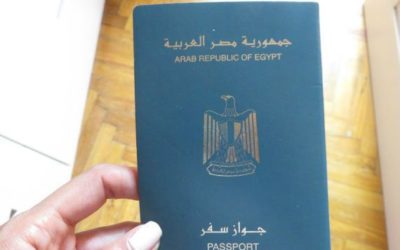
“I have at least 5 tourist visa extensions,” he told Bikya Masr, showing his blue American passport, which is filled with Egyptian visas. “It is frustrating that they are cracking down on tourists wanting to stay longer.”

Then, turning to the more traditional route, Hopkins asked the International Language Institute where he was taking courses for a letter he could take to the authorities in order to obtain a student visa. Upon arrival, however, he was again turned away.

Officials told him only national universities could provide student visas for foreigners in the country, he said.

The moves have left many foreign nationals living in Egypt frustrated, but Egyptian officials said that the moves are part of a plan to become part of the international community’s regular restrictions on tourists in a country.

“All we are doing is enforcing the rules of law that most tourists in other countries abide by so it shouldn’t come as a surprise to the foreigners who are not getting extensions,” said Amr Abdelmaged, a mid-level tourism ministry official who works in the immigration department.

“We have seen a lot of frustration from foreigners, but the reality is that unless they are working or studying at an approved school, they don’t have the right to keep staying without providing the proper documents,” he added.

Still, a number of foreigners have reported that Egyptian authorities have even turned down work permits, leaving many wondering of the future of foreign nationals in the country.

“I am still waiting to hear back about my work visa and it has been a few weeks so it is frustrating because I have a job and until I get the work permit I can’t work,” said one American citizen who asked not to be named.

Not giving out visas to foreigners could leave the tourism industry in jeopardy, experts argue. They say that despite the need to bolster restrictions on visas to foreigners, Egypt’s current economic situation should not move too quickly in forcing out revenue sources.

In 2008, tourism to Egypt brought in some $11 billion and 12.8 million visitors, making it one of the largest sources of income for the North African country, the tourism ministry has reported.

With many of those being foreign “residents” in the country, ending visa extensions could have adverse affects on the attempts to bolster foreigners traveling to the country.

Hopkins said that if he cannot get an extension, he might simply leave the country for good and go elsewhere.

“I know what they are doing, but it is frustrating, especially if they won’t give student visas for those of us studying at local private schools. That doesn’t make sense,” he added.

Those small schools could also face major setbacks if students are unable to stay in country for the duration of classes.

One former German student of ILI in Cairo said that she has been in contact with former instructors who fear that if the government doesn’t give student visas to those attending, it could see massive drops in attendance.

“They said that if students are not able to stay in Egypt for a couple months, it will be hard for them to find people to attend, which leaves the question if they can survive if the new restrictions are not amended,” said Lena Egger, a long-time Cairo resident and student, who is on the final two weeks of her visa in the country.

For now, many foreigners in Egypt currently are confused, frustrated and worried over the legal status in the country. Many are simply deciding to overstay their visas and pay a penalty to leave the country when they choose to stay.

That, others say, could lead to a widespread crackdown and ultimately see the banning of individuals who abuse the system.

Abdelmaged said the ministry has yet to decide on overstay limits, but is looking into tacking on additional fees if too many foreigners decide to overstay their visas.

“Right now, we are in a process of investigating and looking into all possibilities and hopefully soon we will know exactly what is going to happen and we will publicize this to all travelers to the country,” he said.

Street by street, Egypt activists face Old Guard

July 11, 2011 by admin · Comments Off 

After the fall of President Hosni Mubarak, a group of young activists quickly moved to bring the can-do spirit of Egypt’s revolution down to the level of their neighborhood.

They began installing electricity poles in Mit Oqba’s dim streets. They got gas pipes extended to the area. They did what local officials had long promised but never done, with the aim of showing 300,000 low-income residents the benefits of an uprising meant to end the corruption and stagnation under Mubarak.

Then the activists’ parents started getting intimidating warnings: Your children are going to get beaten up by thugs. An official who helped them get papers signed for extending the gas pipes was suddenly transfered to another post.

The activists had run into a collision course with powerful local members of the former ruling party. It was a lesson about the new Egypt: The old regime is still in place and fighting change.

“The regime is not just Mubarak and his ministers. There are thousands still benefitting,” said Mohammed Magdy, one of the activists in Mit Oqba.

Mubarak was ousted five months ago, along with top figures from his nearly 30-year regime. But the military generals who now rule have been slow in – or have outright resisted – dismantling the grip that members of his former ruling party hold on every level of the state, from senior government positions down to local administrations. In the meantime, public anger that real change has not come is growing explosive.

The experience in Mit Oqba illustrates the conflict between old and new being waged street by street and neighborhood by neighborhood.

Under Mubarak’s regime, more than 1,700 Local Councils nationwide, with over 50,000 members, were elected in theory to represent their neighborhoods. In practice, they were a cog in the patronage and corruption machine of Mubarak’s National Democratic Party. Election rigging ensured nearly all councilmembers belonged to the party.

Often they would push projects that lined their own pockets or those of friends. For example, a street would get a new sidewalk if a firm close to the council or ruling party profited. Councilmembers steered services to residents willing to do them a favor later.

The system helped ensure the regime’s hold. Come election time, officials used their patronage to drum out voters for party candidates or to hire thugs to beat up opponents.

Late last month, a court ordered all Local Councils dissolved, potentially a significant step toward reform. But former members retain their connections, backed with cash, giving them a strong tool for regaining seats when new municipal elections are held.

“They have lots of money going around to people. They have ties with big families in the area,” said Heba Ghanem, an activist working with Mit Oqba’s Popular Committee. “Some who want to run for parliament are already slaughtering cows and distributing (the meat) in the neighborhood” – a common way to curry votes.

The same fear holds for national politics, where many one-time officials in Mubarak’s party are gearing up to run for election in September.

The activist neighborhood groups, known as Popular Committees, aim to break not just corruption but also the apathy of Egyptians who have given up trying to make things better. They were born from impromptu neighborhood watch groups that defended homes in a wave of looting the anti-Mubarak uprising.

The watch groups were widely popular as an example of Egyptians working together on their own initiative, and they won support from the young people who had fueled the anti-Mubarak revolt. There are now nearly 50 “Popular Committees” nationwide, each with volunteers working in their home neighborhoods.

Their self-imposed mandate: Make things better and get things done. Many of them have taken the additional title of “in defense of the Revolution.”

That can mean anything – fixing infrastructure and providing literacy classes, working with residents on rooftop gardens or on better water usage, or monitoring officials to keep them accountable. Some conduct “name and shame” campaigns to expose those who take bribes or embezzle – whether policemen or bakers who sell government-subsidized wheat on the black market. They catch perpetrators on mobile phone cameras and publicize the footage.

In Alexandria, Egypt’s second largest city, a gas company needed to repair a damaged valve. But it wanted protection, because its team had to work at night.

With a general police pullback from the streets, the Popular Committee volunteered to provide security instead. The gas company feared offending police by cooperating with the activists, so the committee had its patrol just pass by the work site to make it look coincidental.

The company made the repair.

Mit Oqba, Magdy’s home district in Cairo, provided a unique challenge and opportunity. Ruling party networks were strong in the crowded district, which was used to provide manpower for pro-Mubarak rallies during the uprising.

Soon after Mubarak’s fall, the 24-year-old Magdy and his committee drew up a plan to tackle 12 prominent problems in the long neglected neighborhood. They organized installation of light poles for a dozen streets. Drug dealing was rampant, so they’re pressing officials for more police.

The district badly needed a low-fee government medical clinic. One was underway, but workers – paid by the day – were delaying finishing it. So a committee member is camping out at the construction site, doing everything from badgering them to bringing them daily tea to get it done.

Local officials promised two decades ago to extend natural gas pipelines to Mit Oqba homes. It never happened. So the committee followed the paper trail and got a few approvals signed. Now the main pipeline has been laid, and the committee is helping residents register for connections to their homes.

With the successes, the harassment began, according to the activists. Local Council supporters hacked into the committee’s Facebook group and sent emails to its members that caused fights among them, Magdy said. They transferred the official who cooperated with Magdy to sign papers. They pressured a principal into barring the committee’s literacy class from his school.

To scare the volunteers’ families, they spread word that armed thugs were waiting to attack them, Magdy said.

When that didn’t work, the Local Council tried to take credit. In its newsletter, it proclaimed that it “promised and delivered” on the gas lines. Former ruling party members posed in photos by the new streetlights.

Magdy’s group countered with its own newsletter, “The People Want,” reporting on their activities and on former regime members trying to buy off loyalties. They also praised officials who helped them bring services.

In a last-ditch attempt, a local bigwig who once sat in parliament for the ruling party met with volunteers. He told them bluntly they would fail.

“Who lied to you and told you this party is dead and buried?” he shouted, according to Magdy. “We are still here and we will win again, with your help.”

Zaghloul Rashad, a member of Mit Oqba’s local district council, denied that the council had harassed the young activists, and called them “arrogant” young meddlers. He said the influence of the activists was limited to a few steets. He also denied the activists were responsible for the new gas pipeline, saying it had been approved earlier.

“Does the Popular Committee have a magic wand to say ‘extend gas pipelines’ and it happens?” asked Rashad, who plans to run for election again and expressed confidence he would win.

At the same time, Rashad complained that the activists can in fact march into a local administrator’s office and press him into action, and he’ll comply for fear of seeming anti-revolutionary.

“They couldn’t even enter his office before,” he said. “It is chaos!”

The activists are unfazed. In a snub to Mit Oqba’s Local Council, Magdy’s group hung a banner on Al-Gharib Street, where several councilmembers own homes. One side proclaims “Goals We Achieved” and the other “Goals We Want to Achieve.” So far, they’ve checked off nearly half the original list of 12.

“These kids are good. They’re cleaning up the streets,” said Howeida Mohammed, a 40-year-old woman attending one of the committee’s literacy classes this week. “I don’t want anything to do with the local council.”

The Popular Committees may not survive because of the sheer strength of the old system Mubarak set up, said Alia Mossallam, a doctorate student documenting the Popular Committees and helping them network. But they’ll be a breeding ground for a new generation of politicians, experienced in actually serving a community.

“We have never had goverance from below,” she said. “(The experience) may die down…but everything they have learned will stick with them.”

Protesters to stay in Tahrir despite PM promises

July 11, 2011 by admin · Comments Off 

Protesters who spent their second night in Cairo’s Tahrir Square on Sunday vowed to keep up their sit-in despite a series of concessions by the Egyptian prime minister.

Pro-democracy activists had camped out on the square – the focus of protests that ousted President Hosni Mubarak in February – after mass nationwide rallies on Friday to demand political change.

Hundreds who spent the night in the sweltering heat blocked traffic around the square on Sunday morning; some were forming a picket line outside the Mugamma, a huge government complex that is the centre of Egypt’s sprawling bureaucracy.

“We managed to convince many of the employees not to go to work,” said Ghada Shahbender, a human rights activist who has been protesting since the start of the January 25 uprising.

Protesters have vowed to stay in the square until the demands of the revolution are met, including an end to military trials of civilians, the dismissal and prosecution of police officers accused of murder and torture – before and after the revolution – and open trials of former regime officials.

After nearly two weeks of mounting tension marked by clashes with police, Prime Minister Essam Sharaf on Saturday pledged to meet the demands of the protesters with a series of measures.

Sharaf said he “issued direct orders to the interior minister to stop all police officers accused of killing protesters from working,” in an address broadcast on state television.

He also “ordered the creation of a panel to review the trials (of those accused of) killing protesters and of corruption as soon as possible,” without waiting until after the judicial summer recess.

The premier said he has asked the social solidarity ministry to look into the portfolios of health, education, and salaries and pensions.

But the speech was slammed as empty rhetoric with vague promises and no deadlines, with many activists accusing the prime minister of being too weak in the face of the ruling military council.

“We are still asking for no military rule of the country, and no pressure from the military on the judiciary and the media,” said human rights activist Dina Mohammed, 24.

The Supreme Council of the Armed Forces, which took power after Mubarak stepped down, has angered protesters who accuse it of using Mubarak-era methods to stifle dissent.

The prime minister “only responded to one demand,” said Riham Abdel Salam, 23, a student of film, referring to the sacking of police officers accused of murder.

On the outskirts of Cairo, around 300 protesters briefly cut off the main highway linking the capital to the canal city of Suez, threatening more measures if the demands of the revolution are not met, a security official said.

The state news agency MENA said the army later cleared the road, removing the demonstrators and their barricades without any casualties reported.

But the economic impact of the renewed protests and political tensions was felt as Egypt stocks fell 1.67 per cent on Sunday, with the main EGX-30 index closing at 5270.86 points.

In contrast, Suez Canal revenues were up 12.6 per cent in the first six months of 2011, compared to the first half of last year, reaching 2.54 billion dollars, the canal authority announced on Sunday.

Dozens of former regime officials, including ministers and a handful of police officers, are currently on trial on charges ranging from corruption to murder.

Mubarak himself, who is in custody in a hospital in the Red Sea resort of Sharm el-Sheikh, is to face trial along with his two sons Alaa and Gamal on August 3.

But protesters have criticised the handling of the legal proceedings, demanding a transparent and thorough process for the sake of justice, not revenge.

Egypt sends troops to prevent Suez Canal shutdown

July 11, 2011 by admin · Comments Off 

The Egyptian military on Sunday mobilized ground troops, light tanks and personnel carriers as protesters threatened to close Port Tawfiq, a key port on the Suez Canal.

Offshore, Egyptian navy vessels cordoned off the floating dry dock and other facilities.

The military action was triggered by hundreds of protesters who marched toward the Suez Canal with the intention of shutting it down. The protesters were reacting to a speech late Saturday by Egyptian Prime Minister Essam Sharaf, whose attempt to ease public anger backfired and created more trouble for the Egyptian government led by Marshal Mohamed Hussein Tantawi and his Supreme Council of the Armed Forces.

The protesters, who included families of demonstrators killed in January during the protests that brought down the government of Hosni Mubarak, were turned back by striking shipyard workers.

“The families of the martyrs and hundreds of other protesters wanted to break into the Suez Canal shipyards. We – the canal workers – kept them out to avoid any violence or bloody reaction from the government troops,” said Hamdy Saleh, a shipyard installation technician who has been on strike for the past 25 days.

Port Tawfiq, in the southern part of Suez, hosts the Suez Canal Authority, power plants, the headquarters of the Suez Canal companies, and the main entrances to shipyards and maintenance docks.

The Suez Canal Authority announced Sunday morning that canal traffic was under control in spite of the public strikes and protests.

“The security of the Suez Canal is a red line that should never be crossed. It will be kept safe by the Egyptian National Security Department,” said Adm. Ahmed Ali Fadel, the head of the authority.

During Sharaf’s brief speech Saturday night, he announced the suspension of all officers suspected or charged with killing protesters during the January revolution, forming panels to monitor and speed up the trials of corrupt members of the former government, building a sustained mechanism for continuous dialogue with national youth organizations, and the immediate compensation of victims’ families and full health care for other injured victims of the revolution.

Unidentified top-ranking officers of the Central Security Sector of the Interior Ministry, however, announced the start of a general strike.

“We refuse the suspension of officers who were acquitted by respected courts, we will spread the strike to cover the whole country if the judiciary system is not respected and if it continues to operate under pressure,” said a statement by officers.

Egyptian Central Security Forces are blamed for most of the revolution deaths and injuries after leading deadly attacks on protesters from Jan. 25 to Jan. 28.

EDITORIAL: In Egypt, a second uprising

July 9, 2011 by admin · Comments Off 

Egypt’s youth are once again taking matters into their own hands, as leaders of political parties continue to do what they do best: wage ideological wars against each other through silly Mickey Mouse tweets and hurling the proverbial holier-than-thou shoe in the name of guarding Islam.

Calls by youth groups for the July 8 protests, which started weeks ago, were fueled over the past ten days by three major events: the gratuitous violence used by police and central security forces against protesters on June 28 and 29, complete with teargas, rubber bullets and live ammunition; the clearing of three ex-ministers in graft cases; and the release on bail of seven policemen accused of killing protesters in Suez.

Just one of these events would have been sufficient to galvanize popular support for the protests, which have won over even those Egyptians who believe that protests must end for Egypt to move towards the much-needed political stability that is the bedrock of the path towards economic recovery.

But what is it that has sent Egyptians back to Tahrir? The short answer: crisis of confidence.

Authorities, whether it’s members of the interim Cabinet or the ruling Supreme Council of the Armed Forces (SCAF) have done very little to deserve the benefit of the doubt, according to the growing masses of agitated Egyptians.

For one, their priorities are clearly muddled. While on the one hand they are placing huge focus on keeping the people off the streets, they are doing very little to tackle the reasons why the people keep going back.

The martyrs’ families protests, which were central to the violent clashes between police and protesters last month, could have been easily avoided. True that an official fact-finding mission had concluded that the confrontation was orchestrated by “remnants of the old regime” and that car-loads of rocks were brought in to fuel the violence, the entire face-off would not have taken place if the LE 100 million martyr’s fund which suddenly emerged less than 48 hours later had been announced a month ago.

The feeling that the sacrifices of those who died for the freedom and dignity of this country have not only been ignored, but also their families are being coerced into dropping charges against their alleged killers incensed even those who have not lost a loved one or a breadwinner. Indignant and infuriated, it was only natural for what may have started off as an all-too-common altercation to turn into a full-fledged clash reminiscent of the early days of the Jan. 25 uprising.

And the story doesn’t end there. Within one week of this unjustified and illegitimate use of force, a Suez criminal court releases on bail pending investigations, seven policemen including the former chief of the Suez police directorate and his assistant in a move that has infuriated the families and sent a provocative message to the wider Egyptian society that justice is not being served. Suspicion in the independence of the judiciary and the feeling that the interior ministry is insincere in its committed to purging its ranks from “criminals who have killed our children” can only mean that before we know it, even the ousted dictator Mubarak will get away with it.

The shocking disclosure to Daily News Egypt last week by one of the lawyer of some of the martyrs’ families that the Interior Ministry had illegally paid off five families LE 100,000 each to drop the cases against those charged with their children’s death has confirmed the general suspicion that it’s business as usual at the ministry.

It was no surprise when Loai Nagati, one of the activists arrested on June 28 and falsely accused of “acts of thuggary” — that increasingly elastic and vague charge — who was released Thursday on health grounds, said during an interview on private satellite channel On TV the same night, that the police gave him “the royal treatment,” a good hiding and the threat of rape.

Interior Minister Mansour El-Essawy has since made public statements that sweeping changes within the ranks of the ministry will see the removal of hundreds of top brass police generals including 130 leading central security figures and 75 implicated in the killing of protesters.

Many, however, see the announcement as too little, too late. Why, they ask, has it taken almost five months to start these purges while at the same time over 5,000 civilians have been subjected to military trials and put away in military prisons for years? Why has there been a complete lack of transparency in the trials of ex-regime figures, three of whom were cleared of graft charges — though they are still being tried in other cases?

The mistakes are clear and undisputed and to set matters straight three things must be done: Trials must be made public, which means that the ban on filming court sessions for TV broadcasts must be revoked immediately, people must see the accused in the dock; special tribunals for police officers accused of killing protesters must be set up in order to speed up the process; and court, including documents of high-profile cases, especially those of former regime figures, must be made public or at least the media must have access to them.

Unless the core demands of the millions of ordinary Egyptians who brought about this colossal upheaval on Egypt’s political scene are met with absolute transparency, the country will continue being rocked by street action. The ramifications too will be colossal, whether on the economic or social fronts because the ensuing economic stagnation will affect the most vulnerable, those who can only exercise patience for so long before their children get hungry.

Let’s not allow that to happen.

Rania Al Malky is the Chief Editor of Daily News Egypt.

« Previous PageNext Page »

Bottom