Egyptian troops in Sinai mistakenly fire on Bedouin funeral
May 22, 2013 by admin · Leave a Comment
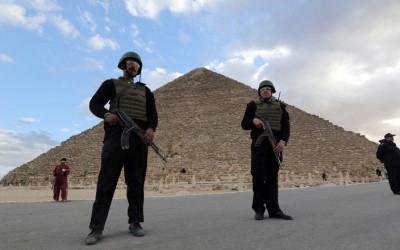
Egyptian troops and police mistakenly fired on a Bedouin funeral in the Sinai Peninsula on Tuesday, security officials said, in the opening salvo of a sweep searching for security personnel kidnapped by suspected militants.
The incident illustrated the hazards of the military operations prompted by the kidnapping last week. A heavy handed attempt to free the captives risks bringing a backlash in Sinai, where resentments among the local population against past security crackdowns have fueled the rise of militancy in the volatile peninsula bordering Gaza and Israel.
Faced with anger among the public and within the security forces over the kidnappings, President Mohammed Morsi has said all options are on the table for securing the release of the seven captives and that the presidency is not negotiating with the kidnappers.
Calls for a tough response have been fueled by a video released this week on YouTube showing the captives blindfolded and pleading for Morsi and his defense minister to meet the kidnappers’ demands for the release of scores of prisoners from the Sinai, including convicted militants. The captives include six members of the security forces and a military border guard.
But multiple officials have said mediators have been in contact with the kidnappers exploring possibilities for their release. Islamist allies of Morsi — who have connections to militants in the Sinai — have urged a negotiated solution.
Since Monday, military and police reinforcements backed by armored vehicles and helicopters have moved into northern Sinai in a show of strength, deploying heavily around the provincial capital, el-Arish. A military official in Cairo said troops are conducting reconnaissance and search operations, but wouldn’t say if this is start of operation to rescue captives. The official spoke on condition of anonymity because he was not authorized to talk about the operations.
Tuesday’s incident came while police and military troops backed by helicopters swept through several villages near the border with Israel where officials say they suspect the captives are held.
The forces encountered a funeral convoy of eight pickup trucks and when the vehicles refused orders to stop, the troops thought they were gunmen and opened fire, security officials said.
Some in convoy fired back — most Bedouin are armed — prompting clashes, until the mourners fled the scene, leaving behind the body of the man they had intended to bury. The troops thought the man had been killed in the fight, until local tribal leaders explained to security commanders that the convoy was a funeral for a man who had drowned, the officials said.
A senior military officer then apologized for the shooting, said the security officials, speaking on condition of anonymity because they were not authorized to talk about the incident.
Morsi has been consulting with his security team, government officials, political and religious leaders how to resolve the crisis, which highlighted the complex security situation in Sinai.
Sinai’s population of Bedouin and local families has long complained of discrimination by authorities and is bitter over repeated security crackdowns during the rule of ousted autocrat Hosni Mubarak. During the 2000s, Islamic militants staged attacks on tourist resorts in the peninsula, prompting a vast sweep of arrests.
Crackdowns have seen frequent reports of torture of Sinai’s detainees, and some detainees have been held for years without conclusive trials. Repeated promises to families and tribes of detainees to resolve their cases have gone unfulfilled, fueling resentments.
Extremist groups only increased their activity in Sinai amid the breakdown in law and order since Mubarak’s 2011 ouster, with increasing attacks into neighboring Israel.
Morsi faced his first Sinai challenge in August last year, just over a month after taking office, when militants carried out the most brazen attack ever on military troops, killing 16 Egyptian soldiers along the border with Gaza and Israel. Morsi at the time vowed to restore stability, launching a brief military operation that resulted in the closures of some smuggling tunnels between Sinai and Gaza and the arrest of the man believed to be at the heart of the current kidnapping, Ahmed Abu Shita.
Abu Shita was convicted to death in September for involvement in a major attack on a northern Sinai police station in 2011 that left three policemen dead. Thirteen others, including eight in absentia, were also given death sentences in the case.
Those behind the current kidnapping are demanding the release of Abu Shita, along with other Sinai prisoners.
Such strong security buildup is uncommon in Sinai. The 1979 peace deal between Egypt and Israel restored Sinai to Egypt after it was captured by Israel in the 1967 war. But it restricted numbers of troops and types of weapons Egypt could station there. Nothing more than a light weapon was allowed in most of the peninsula, and only police — not soldiers — were allowed in the zone directly on the border.
But for the past years, with rising lawlessness in Sinai and increased smuggling activities with Gaza, Israel bent some of the rules.
Major Egyptian military operations there would require Israeli consent under the terms of the peace agreement. Israeli officials declined to comment Tuesday, but in the past have said that security cooperation has remained strong since the new Islamist government took office. The official silence could be a signal of Israeli consent.
Sinai hostages arrive in Cairo
May 22, 2013 by admin · Leave a Comment
Seven Egyptian security personnel, who were released by kidnappers in the Sinai Peninsula on Wednesday morning, have landed at Al-Maza military airport in Cairo.
President Mohamed Morsi, Defence Minister Abdel-Fatah El-Sisi and Chief of Staff Sedky Sobhy were at the airport to receive them.
A press conference by the armed forces will be held shortly.
The seven security personnel – a member of the armed forces, four port security officers and two state security officers – had been held by unidentified kidnappers in the Sinai Peninsula since their abduction last Thursday.
An unknown security source told Al-Ahram Arabic that the kidnapped soldiers were left in the desert around 70km south of Al-Arish before a military helicopter picked them up.
In comments published on Twitter, President Morsi praised Egypt’s military, general intelligence and army intelligence for their role in resolving the hostage crisis.
Morsi also praised the people of Sinai for “their patriotic stance, and for putting the nation’s interest above all.”
“Long live Egypt. I am waiting for the arrival of my sons,” Morsi added.
At separate press conference scheduled for 11pm at the presidential palace, spokesmen from the presidential office, the military and the interior ministry will explain how the hostage crisis was resolved.
New Egypt tax law has cuts for poor but leaves wealthiest unchanged
May 22, 2013 by admin · Leave a Comment
Egypt’s president signed a new tax law Tuesday that cuts the amount paid by poorer Egyptians in the latest move aimed at reforming the country’s economy.
The changes, which are more favourable than the previous tax law for the country’s most vulnerable, could boost Islamists in parliamentary elections slated for later this year.
The interim parliament, led by Islamist allies of President Mohammed Morsi, approved the measure last week.
Ahmed el-Sayyed el-Naggar, an economic expert at the Ahram Center for Political and Strategic Studies, argued that the tax reforms target an already struggling middle class, but leave the country’s richest people untouched.
Lawmaker Mohammed Gouda, a member of Morsi’s Muslim Brotherhood-affiliated party and a member of parliament’s economic committee, told The Associated Press that the law was aimed at protecting foreign investments, fostering economic equality and bolstering revenues.
The new tax law may also help reduce a burgeoning budget deficit projected to reach $28.5 billion in the coming fiscal year, around $1.7 billion more than this year.
Egypt is negotiating a $4.8 billion loan from the International Monetary Fund that could restore confidence among foreign investors in the economy. The IMF is pushing Egypt to overhaul its tax and subsidy system as conditions for the loan.
The IMF loan is one measure that could increase foreign currency reserves, about $14.4 billion last month, a third what they were before Egypt’s 2011 uprising. The country’s currency has meanwhile lost more than 10 per cent of its value since December.
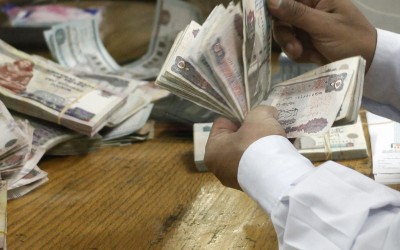
The law signed Tuesday by Morsi stipulates that anyone who earns 5,000 Egyptian pounds or less a year ($716) will be exempt from paying income tax — as it was under ousted President Hosni Mubarak.
But the new law also takes into consideration everyday expenses, allowing up to 7,000 pounds ($1,000) in tax deductions. This technically expands the bracket of those exempt from paying income tax to include those who earn salaries up to 12,000 pounds ($1,700) a year.
The second, third and fourth tier tax brackets have also been expanded, lowering taxes by around five per cent on a range of annual incomes up to 250,000 Egyptian pounds ($35,000).
The new tax law will benefit the country’s poor and could help improve their living conditions, according to economist Wael Gamal.
It could also help bolster the popularity of Islamist parties eyeing elections expected to take place sometime this year, though no date has been set.
The uprising that toppled Mubarak was fueled in large part by poorly paid civil servants and impoverished Egyptians tired of rampant corruption and striking social inequities.
Around 40 per cent of Egyptians live near or below the international poverty line of $2 a day. In a sign of the worsening economy, the percentage of people living on under $1 a day rose to 25 per cent in 2011, up from 21.6 per cent in 2009.
Among the other changes approved by parliament are assessing small and medium-sized businesses the same tax rate as multi-million dollar concerns.
The bill raises taxes by five per cent on companies earning $1.4 million or less a year. They previously paid 20 per cent.
Gouda said a unified 25 per cent tax levied on all companies would discourage business owners from evading taxes and underreporting income.
“Where will a person go to hide from the government if all are paying the same,” he said.
Many smaller companies are already reeling from economic fallout after the 2011 uprising and are suffering from the depreciation in the Egyptian pound.
A proposal that would have added a progressive layer to the law by raising taxes to 30 per cent on people who earn 5 million Egyptian pounds (almost $720,000) or more was not included in the bill.
El-Naggar, the economist from the Cairo think-tank , said the new law, while alleviating tax burdens for the poor, makes no changes to what the wealthiest pay.
“This is a corrupt approach that benefits the rich businessmen that support Morsi,” el-Naggar said. “Taxes should increase with an increase in income. It is the basic philosophy for taxation.”
While the new income tax laws are set to be implemented starting next month, a less popular increase in sales tax has not yet been introduced.
Additionally, possible changes to the country’s subsidy system could impact millions who rely on government help to pay for fuel and bread.
A report by the U.N. World Food Programme (WFP), the International Food Policy Research Institute (IFPR) and Egypt’s statistics agency found that nearly 14 million Egyptians, or roughly 17 per cent of the population, suffered from food insecurity in 2011, as opposed to 14 per cent in 2009. The report defines food security as “when all people, at all times have access to sufficient, safe and nutritious food to meet their basic dietary needs.”
It found that around 40 per cent of household expenditures are spent on food, and poorer people spend more than half.
The report said that reforms to the current subsidy system would allow for savings that could be invested in nutritional interventions and job creation.
Also Tuesday, Standard & Poor’s Rating Services said an increasingly difficult set of economic circumstances could raise inflationary pressures and lead to further social unrest in Egypt. Its report said inflation causing erosion of incomes could further bring down an “already low standard of living for the majority of the population.”
Tackling Egypt’s rising food insecurity in a time of transition
May 22, 2013 by admin · Leave a Comment
Owing to a succession of crises and worsening poverty, food security in Egypt started to deteriorate as early as 2005. These crises included the avian influenza epidemic in 2006; the food, fuel, and financial crises of 2007–2009; a further rallying of global food prices starting in late 2010; and the challenging macroeconomic context that followed political instability in the wake of the 2011 revolution. Household food insecurity and child malnutrition have risen significantly, and food subsidies are an important part of the country’s safety net. In the current economic climate of constrained government resources, increasing efficiencies in the subsidy system can facilitate investment in job creation and targeted food security and nutrition interventions. Politically feasible policy options include improving the efficiency of supply chains, improving the targeting of subsidies, and complementing subsidies with targeted nutrition and income generation programs. A monitoring and evaluation system is needed to inform decisionmaking, and policymakers must learn and adjust accordingly during the reform process. Finally, subsidy reform is likely to be most successful if it is integrated into a broader national strategy of development and food security.
In Egypt, even an autopsy is political
May 21, 2013 by admin · Leave a Comment
Egyptian forensic officials in Cairo say they are struggling with the overwhelming number of bodies that continue to arrive at their facilities bearing marks of torture and abuse in police custody, even when the streets are calm from political unrest.
Senior pathologists with the government-affiliated Forensic Medical Authority (FMA) — speaking to GlobalPost on the condition of anonymity — say Cairo’s main forensic facility has dealt with more than 1,000 cases of suspected abuse of police force each year since the uprising at the beginning of 2011.
But poorly-trained, ill-funded and under the supervision of Egypt’s justice ministry, forensic staff are under pressure to either hide or downplay such cases, both doctors and political activists say. Forensic officials report coming under indirect pressure to follow direct orders and nothing more, while staff members who do not comply can face salary deductions or relocation to facilities far from Cairo.
Despite the popular uprising that swept Egypt’s hated police forces from the streets two years ago, police brutality remains a key feature of the Egyptian state. Now, autopsies on both deceased political activists and ordinary Egyptians who may have been tortured — where government-linked doctors are suspected of issuing falsified reports — have become the latest battleground for activist goals of justice and state accountability.
“We are used to complicity between the police and the forensic authorities,” said Aida Seif El Dawla, head of the El Nadeem Center for Rehabilitation of Victims of Violence in Cairo.
“Of course, autopsies can never be 100 percent conclusive in difficult cases,” she said. “But if there is a slither of doubt that this person could have died of torture, it must be mentioned.”
President Mohamed Morsi, himself a political prisoner under former President Hosni Mubarak, cannot afford to be seen as presiding over a security apparatus that acts with the same routine brutality that was witnessed under his dictatorial predecessor.
Under Mubarak, autopsies of activists and others suspected of having died in police custody commonly attributed deaths to immediate physical triggers, such as a drop in blood pressure. This type of hedging exonerated the security services of responsibility by failing to record any accompanying injuries.
Today, forensic workers in Cairo say they are witnessing the same injuries and cover-up techniques.
The most common injuries they see in cases of suspected police abuse are blunt trauma to the head and feet, electric shocks and welts that are believed to have come from beatings with cables and belts. Suspension and sexual assault are also described as frequent.
In one of the most high-profile cases of police abuse since the revolution, friends and activists circulated on social media photographs of the bruised body of their opposition activist colleague, Mohamed Al Guindy, in February.
An initial forensic report suggested he had been hit by a speeding van in downtown Cairo, after disappearing from the vicinity of a protest. But his injuries bore the hallmarks of police abuse, and security sources later told Reuters that Guindy had been “interrogated” for three days and nights before he died.
A revised medical report released in March, after significant press coverage, concluded that he had been “beaten violently,” but did not identify of the perpetrators.
In another murky case, journalist Al Husseini Abu Deif was shot and killed in December while reporting on clashes between supporters and opponents of Morsi and the Muslim Brotherhood group from which the president hails.
The preliminary medical report was heavily delayed, and failed to include details on the ammunition that was used. This month, a new report concluded that Abu-Deif had been shot with an expanding bullet, ammunition that is routinely handed out to law enforcement officials.
“Our results are independent,” the forensic authority’s acting head, Dr. Magda Al Karadawy, said in defense of the organization’s independence. “No one can interfere with what we do. Where there are delays, these come from the side of the prosecution.”
Indeed, rights groups have criticized the Morsi-appointed prosecutor-general of presiding over the prosecution’s new role in aiding police impunity.
“If they [the forensic doctors] want to examine anything further, [doctors] have to request approval from the prosecution, which it often denies,” said Dr. Mostafa Hussein, a psychiatrist who trained with the FMA.
In addition to the apparent political pressure, delays and inaccuracies also cloud the process.
Egypt’s overall expenditure on healthcare, estimated at $4.5 billion in the fiscal year 2012-13, accounts for just five perfect of the state budget. Only a paltry amount of this filters through to the forensic authority, and staff complain that they often have to pay for their own gloves, tools, and even drugs.
Inside Zeinhom, a morgue adjoined to the forensic authority’s Cairo headquarters that handled most of the cases coming from the city’s political protests, the implications are clear: dirty floors remain flecked with blood, and equipment can be decades old.
When political violence results in an influx of corpses, staff says they are left with no choice but to leave them out in the open until space is found in refrigerators. Bodies can be left for days without proper preservation.
In cases of alleged police abuse, documentation tends to be rudimentary in detail, subject to significant delays, and in some cases, includes fabrications, according to FMA staff. Doctors can take between two and six months to issue medical reports.
But human rights organizations say these delays minimize the chances of achieving justice for those who have faced abuse.
The United Nations Committee Against Torture says prompt physical examinations are vital if successful prosecutions are to be achieved, otherwise physical traces of torture disappear.
“It’s a question of transitional justice,” said Prof. Khaled Fahmy, a historian of forensic science at the American University in Cairo. “There are so many families who have yet to receive an answer as to how their children died in police custody, and forensic medicine lies at the very core of this.”
For Fahmy, the crisis runs deeper than a budgetary or staffing shortage. The problem is one of systemic failure in medical institutions stunted by decades of authoritarian rule.
“Physicians are neutral to most cases,” adds Dr. Hussein, “But not those involving the state.”
Egypt Sends Show of Force to Sinai After Kidnappings
May 21, 2013 by admin · Leave a Comment
President Mohamed Morsi of Egypt sent dozens of tanks and hundreds of soldiers to Sinai on Monday as a show of force in the largely lawless area after unknown gunmen kidnapped seven Egyptian security officers there last week.
The kidnappings have highlighted the vast security vacuum that has spread across Sinai, the strategically important peninsula that borders both Israel and the Hamas-controlled Gaza Strip, since the revolution that ousted President Hosni Mubarak in February 2011.
Sinai residents have long complained of neglect by the Egyptian state, and the past two years have seen the impoverished desert peninsula, which is about the size of West Virginia, become a free zone for tribal militias, armed smugglers and bands of Islamist extremists who have attacked police stations and blown up natural gas pipelines.
Security officials say the kidnappers seek the release of their comrades who have been jailed for deadly attacks on a tourist hotel and a police station.
Some of them are still awaiting trial, while others have been sentenced to death or to lengthy prison terms.
While condemning the kidnappings, human rights groups accuse the government of exacerbating Sinai’s militancy by denying the suspects due process.
The failure of Mr. Morsi’s government to find and free the captives since their disappearance on Thursday has developed into a political black eye and exposed rifts between Mr. Morsi’s more conciliatory approach to dealing with extremists and the less compromising stance of the Egyptian military.
Both were left increasingly vulnerable on Sunday after a video was posted online showing the seven men blindfolded with their hands behind their heads, saying they had been tortured and pleading with Mr. Morsi to release political prisoners.
“We implore you as fast as possible to release the political prisoners from Sinai as fast as possible because we can’t take any more, any torture,” one captive says.
Mr. Morsi, whose government faces widening discontent over the decline of Egypt’s economy and has struggled with frequent street violence, first sought accommodation.
A statement by his office on the day of the kidnappings said he would be “vigilant in protecting the souls of all, be they the kidnapped or the kidnappers.”
The statement said that Mr. Morsi sought to address the concerns of Sinai residents “in a comprehensive way” and that he was reviewing the files of some of the area’s prisoners.
But a new statement on Sunday suggested a more forceful stance.
After a meeting that included military leaders, Mr. Morsi’s office said top officials were committed to “the speedy liberation of the kidnapped soldiers and the saving of their lives.”
On Monday, a banner headline in Al Ahram, a state newspaper, said: “Morsi: No dialogue with the criminals.” Shipping traffic through the Suez Canal was halted so military equipment could cross into Sinai, and state media said four helicopters had transported a team of special forces.
Omar Amer, a presidential spokesman, denied to reporters Monday that Mr. Morsi had changed his stance, and stated that “all available means” would be used to free the men.
“The presidency knows the measures it is taking, and it will take the right measure at the right time,” he said.
One soldier and six police officers are being held captive.
Their disappearance at the hands of unknown men outraged their colleagues, who shut down the Rafah border crossing between Egypt and Gaza on Friday in protest and have kept it shut since.
They shut another crossing with Israel on Sunday, and the strike spread to five police stations across north Sinai on Monday.
Monday’s deployment was the largest military movement in Sinai since August, when Egypt launched a security campaign after a militant attack killed 16 Egyptian border guards.
As the army moved toward Sinai, a group of Egyptian human rights organizations warned the government against a “shortsighted security solution” that did not address the grievances of Sinai’s residents.
The statement discussed the legal proceedings against men sentenced to death and lengthy prison terms in deadly Sinai attacks: the bombing of a hotel in the resort town of Taba in 2004 that killed 34 people and an armed attack on a police station in El Arish in 2011 that killed one police officer, one soldier and three others.
The groups said that the men had been sentenced by state security courts that had exceptional powers under Egypt’s emergency law and that many had been convicted with evidence obtained through torture and other illegal means.
Preparatory school student shoots classmate in Upper Egypt
May 21, 2013 by admin · Leave a Comment
A middle school student in the Upper Egyptian city of Qena was injured on Monday after a classmate, Omar El-Hambool, shot him in the arm during an exam.
El-Hambool was later arrested and is currently awaiting questioning by public prosecutors.
According to investigations by Upper Egypt’s General Security Directorate, El-Hambool entered the exam room carrying a machine gun before opening fire on his fellow student.
The attack reportedly came in the wake of an earlier dispute between the two young men.
The injured student was transferred to the Qena General Hospital. The exam, meanwhile, was postponed.
Qena is known for being a centre of Egypt’s illicit arms trade. The flow of smuggled weapons into Upper Egypt, especially Qena, surged following the 2011/12 uprising in next-door Libya.
Most smuggled weapons are believed to have come from Libya and Sudan, Egypt’s neighbour to the south.
Meanwhile, in Egypt’s Nile Delta, a 15-year-old preparatory school student in the Gharbiya governorate threw a teargas canister into his school on Monday after finishing a final exam.
According to Al-Ahram’s Arabic-language news website, Ibrahim found the canister on the street – the site of recent political clashes – and threw it into the school “for fun.”
Along with a handful of other Egyptian governorates, Gharbiya has recently witnessed intermittent clashes between opponents of Egypt’s President Mohamed Morsi and security forces, during which police frequently fired teargas at protesters.
No dispute between Egypt president, military over Sinai crisis
May 21, 2013 by admin · Leave a Comment
Egyptian military expert Abdel-Moneim Kato on Monday denied the existence of any differences between President Mohamed Morsi and Defence Minister Abdel-Fattah El-Sisi over how to secure the release of seven Egyptian soldiers kidnapped last week in the Sinai Peninsula.
“There is no conflict between the presidency and the military leadership because the president is the commander-in-chief of the armed forces,” Kato told Turkish news agency Anadolu. “They share the same vision.”
Since last Thursday’s kidnapping, speculation has been rife about a possible dispute between Egypt’s military leadership and the presidency over how to deal with the crisis.
On Sunday, the presidency issued a statement denying “any differences” between Egyptian state apparatuses regarding the kidnapped soldiers, noting the “complete coordination” currently underway between the ministries of interior and defence.
The statement came following a meeting between President Mohamed Morsi and several security officials – including El-Sisi – in which attendees stressed that the kidnapped soldiers would be safely recovered.
Kato, for his part, said that the only way to free the kidnapped soldiers was by “military intervention” like that seen in ‘Operation Eagle,’ launched in August of last year after 16 Egyptian border guards were killed by unidentified assailants.
‘Operation Eagle,’ initially intended to secure vital establishments in the Sinai Peninsula, ultimately became a combat engagement with Sinai-based militants, Kato explained, with the aim of “quashing terrorist and criminal activity.”
Similarly, Kato explained, the current deployment “doesn’t only aim to free the soldiers and arrest the kidnappers, but will continue for several weeks in an effort to track down criminals and eliminate terrorist hotspots.”
Commenting on the army’s deployment on Monday of armoured vehicles and personnel carriers in North Sinai, Kato asserted that the move would not have any negative impact on Egypt’s Camp David peace accords with Israel, which tightly limit the number of Egyptian troops deployed in the border area.
“Egypt doesn’t pay attention to the accords when its national security is under threat,” he said. “The military is obliged to defend the land and fight terrorism.”
Under the terms of the 1979 peace treaty, Sinai is divided into three regions, in each of which Egypt is allowed to deploy limited numbers of troops and armaments. Area C, the region closest to Israel, is subject to the tightest deployment restrictions, according to the treaty.
Kato asserts that the methods used by last Thursday’s kidnappers are in line with those used by Al-Qaeda and other Takfiri groups.
The seven kidnapped soldiers include one member of the armed forces, four from port security and two from state security.
Following the kidnapping, a security source stated that the perpetrators had demanded the release of Sinai-based militants arrested by authorities almost two years ago.
A video released on Sunday reiterated the same demands listed by the blind-folded hostages.
The militants were convicted of killing five security officers and one civilian during attacks in June/July 2011 on a police station in the city of Al-Arish and a North Sinai branch of the Bank of Alexandria.
A total of 25 individuals were charged in the case.
IMF raises Egypt 2013 CPI forecast to 10.9%, highest since 2010
May 21, 2013 by admin · Leave a Comment
Inflation in Egypt is expected to climb to 10.9 percent this year, the highest level since 2010, the International Monetary Fund said on Tuesday, more than it expected in April.
“Inflation is expected to rise in Egypt, Jordan, Morocco, and Tunisia, reflecting recent and planned subsidy cuts and, in some cases, pressure from monetization of fiscal deficits and supply shortages,” the IMF said in its regional outlook.
The Fund expected Egypt’s inflation of 8.2 percent in 2013 in its half-yearly analysis of the world economy published last month.
In 2014, however, price pressures may be a bit lower than previously thought as the IMF cut the country’s consumer price growth prediction to 11.6 percent from 13.7 percent seen in April, the report showed.
The IMF did not change economic forecasts for other Middle East and North African oil importers and exporters in its new report, which closely follows the global outlook.
Egypt’s urban consumer inflation accelerated to 8.1 percent in the year to April, fuelled by rising food and energy prices and a struggling pound currency.
It is expected to climb further as the government pushes through tax hikes and subsidy cuts to secure a $4.8 billion loan from the IMF after two years of economic and political upheaval.
Negotiations with the IMF have stumbled repeatedly over government resistance to the austerity measures needed to get the fiscal deficit under control.
The IMF expects Egypt’s budget deficit to widen to 11.3 percent of gross domestic product in the fiscal year, which ends in June, from 10.7 percent in the previous year, but narrow again to 8.7 percent in the fiscal 2013/14.
Egypt’s newly-appointed Investment Minister Yehya Hamed said earlier this month that the shortfall will be 11.5 percent of GDP in the 2012/13 year.
Parents of British girl, 5, who drowned in a hotel pool say that no lifeguards were on duty Read more: http://www.dailymail.co.uk/news/article-2327295/Parents-British-girl-5-drown-hotel-pool-say-lifeguards-duty.html#ixzz2TpIGxu71 Follow us: @MailOnline on Twitter | DailyMail on Facebook
May 20, 2013 by admin · Leave a Comment
The grief-stricken parents of a five-year-old girl who drowned in Egypt were flying home last night as a row intensified over who was to blame for her death.
Chloe Johnson was reportedly left by a shallow toddler pool in Sharm el-Sheikh for a few minutes while her parents fetched her a drink.
She drowned in another pool with a wave machine, which her parents, Sarah Thompson and Tony Johnson, say was not manned by lifeguards.
Tragic: Chloe Johnson died in a hotel wave pool when her parents left to fetch a drink
Anger: Chloe’s parents have expressed their anger at the lack of lifeguards at the hotel
Miss Thompson, 32, told a Sunday newspaper: ‘She was playing with her little friend. I explained to her twice, called her, told her exactly where we were before we went to get a drink.
Mother of British girl, 5, who drowned in Egyptian hotel pool claims no lifeguards were on duty and ambulance took FOUR HOURS to arrive
Mairead Philpott set to appeal against length of jail sentence for killing her six children after defence lawyer says her role ‘was not as substantial as the judge assessed’
‘She went to the wave pool, which was supposed to be manned by two lifeguards, but there were none there. I was walking around with her drink… looking for her, calling for her… The pool wasn’t monitored while there were waves going on.’
But Egyptian prosecutors said safety instructions at the hotel state that ‘children five years old and under must only use the pool under the supervision of their relatives’. They confirmed the couple had told police that a lifeguard was neglectful and had accused him of being the ‘cause of their daughter’s death’.
Devastated: Chloe’s grandparents spoke of their loss shortly after her death
Heartbroken: They spoke of their anger at the lack of help the family received in Sharm el Sheik
They said the family did not come forward to be formally interviewed, meaning investigators had to rely solely on accounts given by lifeguards and the hotel. It is not clear whether the couple were aware they had to make an official report.
Maged Ramzy, of Sharm el-Sheikh Prosecution Office said a lifeguard accused of neglecting the young girl was released yesterday, while an investigation is carried out.
Miss Thompson, of Forest Hill, south London, paid tribute to her ‘cheeky, beautiful, vibrant’ daughter, who survived open heart surgery at two days old and was on her first holiday abroad. She said: ‘I am just empty without her.’
Probe: First Choice said it would carry out a ‘full and thorough investigation’ in partnership with the hotelier
Heartache: The youngster died in a pool at the Coral Sea Waterworld hotel. File picture.
The distraught mother said staff at the Coral Sea Waterworld hotel initially did nothing to try to revive Chloe, leaving her father to attempt mouth-to-mouth resuscitation as they waited for emergency services.
Mr Ramzy added: ‘According to the prosecution’s investigations, the father was with her in the pool when she [was found] drowned and the lifeguards arrived to her within five seconds.’
Egypt’s Chamber of Diving and Watersports is investigating whether safety instructions were shown clearly and whether the lifeguard was to blame or not.
Grandparents April and Gordon Johnson, said the family felt ‘angry and so hurt’.